Cases
Villages where life rests on relationships rather than money already exist around the world. These are twelve that walked ahead of us.
The life we are drawing is not a new invention. One of these places has been going for sixty years; another collapsed once and stood back up smaller. Their successes and their failures correct our design.
The twelve gathered here differ in size, country and belief. They have one thing in common: they decided to provide the basics of a household together with their neighbours rather than each on their own bank statement. For each one we have added a line on what it teaches us.
Open the map kept by the Global Ecovillage Network and many more appear. We intend to become one of those points.
Moray, Scotland · Founded 1962
Findhorn Ecovillage
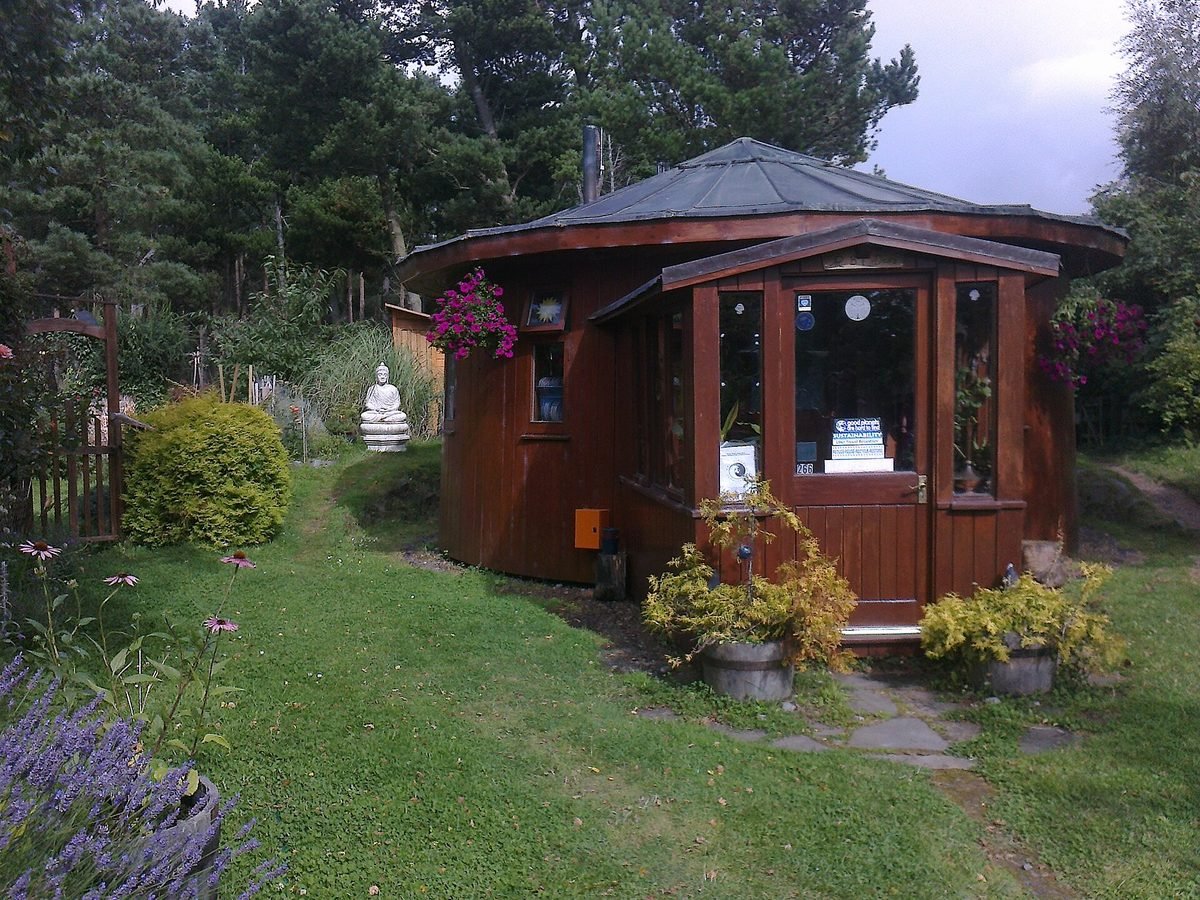
A small community that began in 1962 and became the place with the smallest ecological footprint ever measured in the industrialised world.
People have lived together at Findhorn since 1962. The work of rebuilding the place ecologically began in earnest with the 1982 conference Building a Planetary Village, and eco-houses, a wind turbine and a biological waste water system followed one by one.
An independent study concluded that residents here have a smaller ecological footprint than any community measured in the industrialised world, and half the UK average. UN-Habitat named it a best practice twice, in 1998 and 2018.
The first international ecovillage conference, held here in 1995, gave birth to the Global Ecovillage Network.
The village also admits its own contradiction: much of its income came from course participants who arrived by plane, and those flights were never in the count. It is now moving its livelihood closer to home.
What Kairos takes from it
How a village earns its keep is part of its ecological design. If guests are the income, the guests' travel belongs in the ledger.
Video
Read more
- Official siteecovillagefindhorn.com
- Wikipediaen.wikipedia.org
Tamil Nadu, India · Founded 1968
Auroville
An experimental township begun in 1968 in front of young people from 124 nations, meant to stand above creed and nationality.
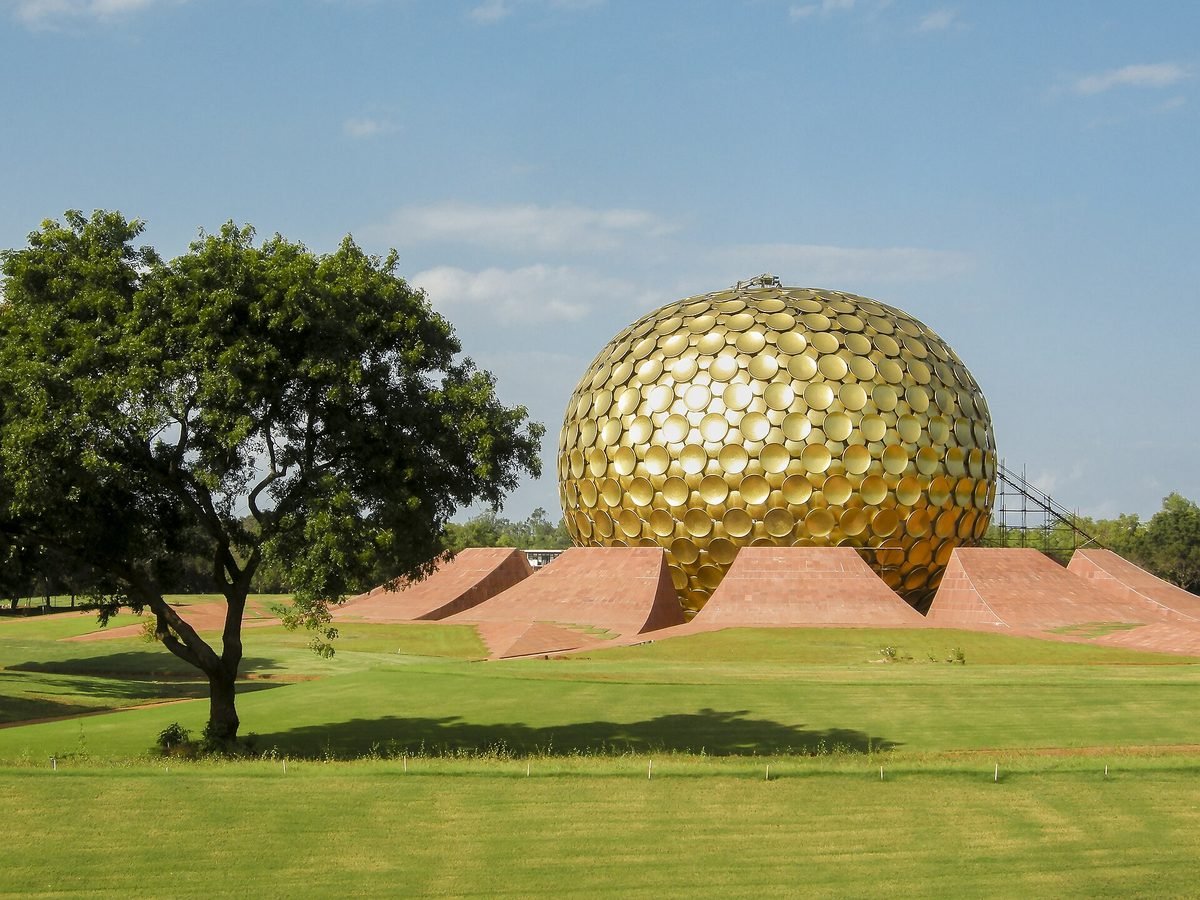
Auroville was inaugurated on 28 February 1968. It was founded by Mirra Alfassa and designed by the architect Roger Anger, and youth representing 124 nations took part in the opening.
More than 3,300 people from some 60 countries live there now. At the centre stands the Matrimandir, a spherical building for meditation, with housing, workplaces and forest spreading around it.
What makes Auroville unusual is not its size but its order of operations. The shape of the town was drawn first, and the last fifty years have been spent filling it in.
What Kairos takes from it
Draw the plan first and progress may be slow, but the direction holds. A plan outlasts the people who made it, so decide in advance who is allowed to change it.
Video
Read more
- Official siteauroville.org
- Wikipediaen.wikipedia.org
Queensland, Australia · Founded 1987
Crystal Waters
The world's first permaculture village. Eighty per cent of the land was left in common and the houses went on the rest.
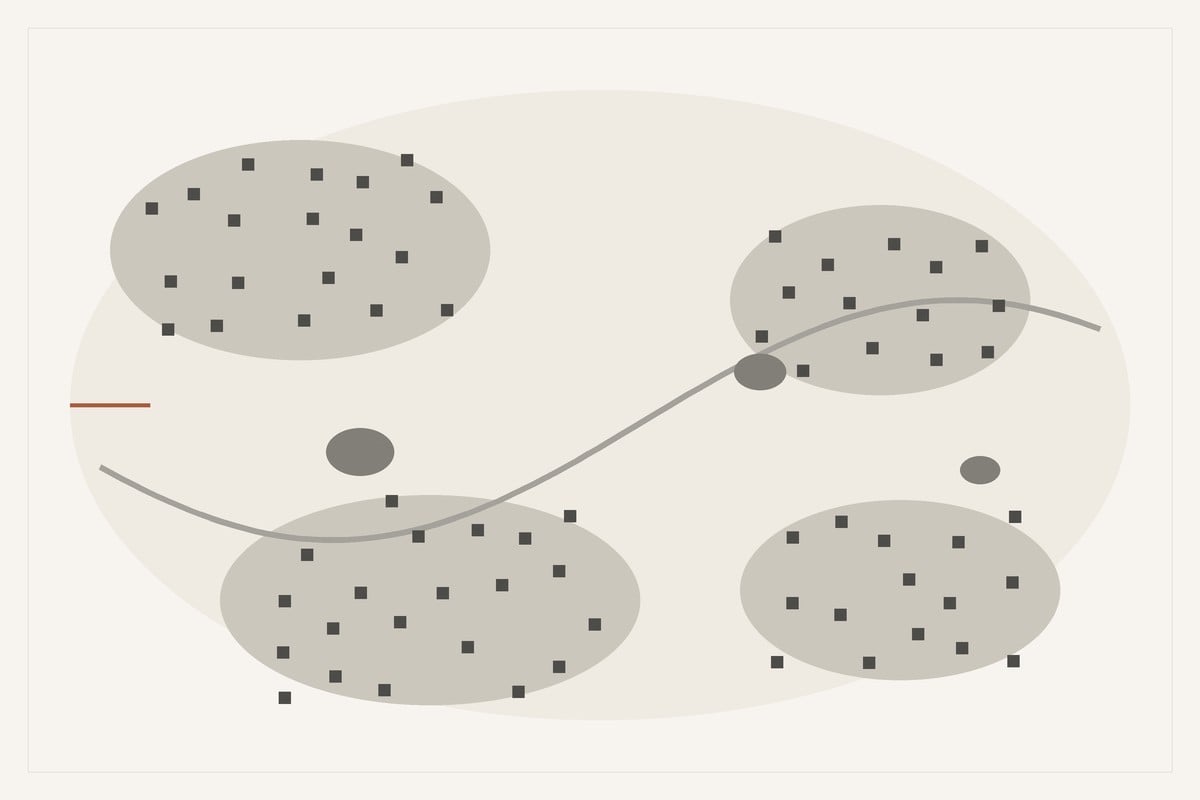
Opened in 1987, Crystal Waters was the first intentional village designed on permaculture principles. Of its 640 acres only 83 one-acre lots are residential; the rest of the land is held in common.
It was a finalist for the World Habitat Awards in 1996 and entered the United Nations' World's Best Practices database in 1998. More than 250 people live there today.
The village decided to keep no cats or dogs. Because of that it has become a wildlife sanctuary where kangaroos, wallabies and a great many birds and reptiles share the same ground as the people.
What Kairos takes from it
Making the private lots small and the common land large settles almost everything about a village's character — and the ratio can only be set once.
Video
Read more
- Official sitecrystalwaters.org.au
- Wikipediaen.wikipedia.org
Saxony-Anhalt, Germany · Founded 1997
Sieben Linden Ecovillage
Homes built of straw bales, including the largest of their kind in Europe, on land the co-operative owns.
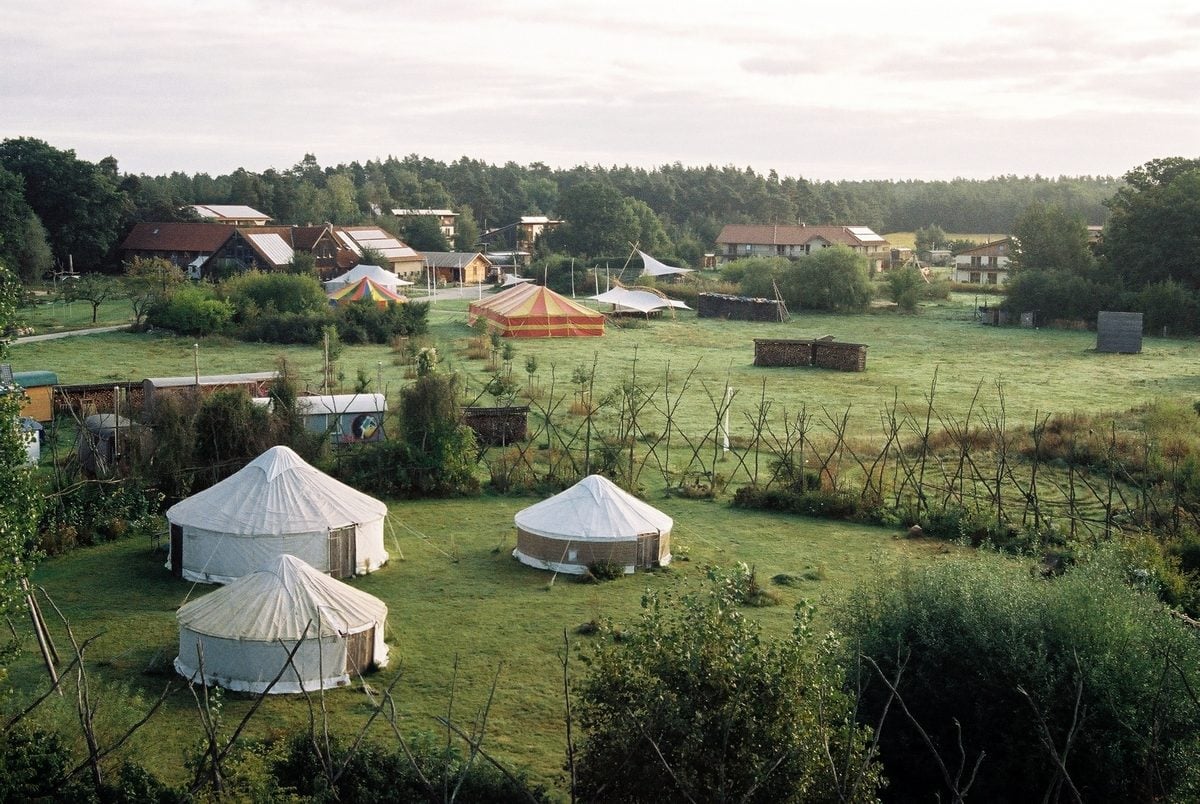
An idea that started in Heidelberg in 1989 spent years looking for land before settling on an old farmstead near Poppau in 1997. The site now covers 115 hectares.
Most of the houses are built of straw bales. In 2004, once straw had been approved as a building material, the first two-storey straw-bale house went up.
In 2005 a three-storey building followed, 500 square metres housing about twenty people — at the time the first of that size in Europe.
Residents earn their own living, but the land and the infrastructure belong to a settlement co-operative that every adult joins by taking eleven shares.
Solidarity farming grows about 75 per cent of the village's vegetables and fruit, and the toilets have been urine-separating composting toilets from the beginning.
What Kairos takes from it
If houses are bought and sold by individuals, a village eventually becomes real estate. Tie the ownership into a co-operative and what accumulates is a household, not a market price.
Video
Read more
- Official sitesiebenlinden.org
- Wikipediade.wikipedia.org
Virginia, USA · Founded 1967
Twin Oaks
A community that has shared all of its income since 1967 — and counts the washing-up as work.
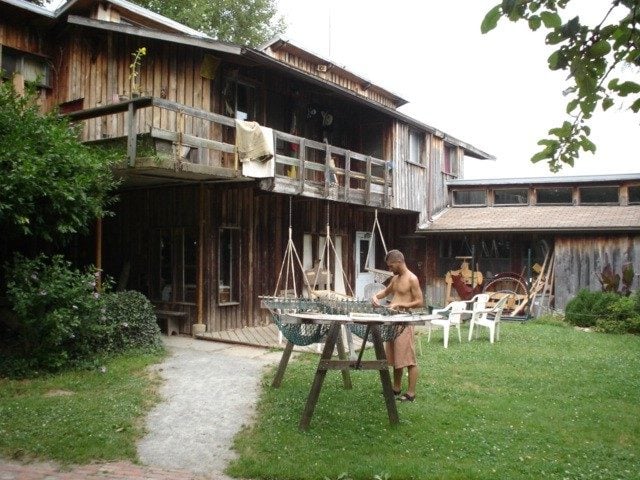
Seventy-five adults and fifteen children live on 350 acres of rural Virginia. The original inspiration in 1967 was Skinner's novel Walden Two; it is now only one influence among many.
The heart of the place is income sharing. Rent and food are the group's responsibility, so no one has to earn those basics separately.
The time and money that frees up is deliberately allocated — hours spent on political activism count towards the weekly work quota.
Work is divided through a trust-based labour system in which all work is valued equally, which means the domestic chores usually not counted as 'real work' count exactly the same. It comes to about 45.5 hours a week.
What Kairos takes from it
What you count as work decides who gets respect. Simply putting care and housework in the ledger removes a great many arguments.
Video
Read more
- Official sitetwinoaks.org
- From the villagetwinoaks.org
- Wikipediaen.wikipedia.org
Missouri, USA · Founded 1997
Dancing Rabbit
A prairie village that runs on six lines of ecological covenant and a land trust. Nobody keeps a car.
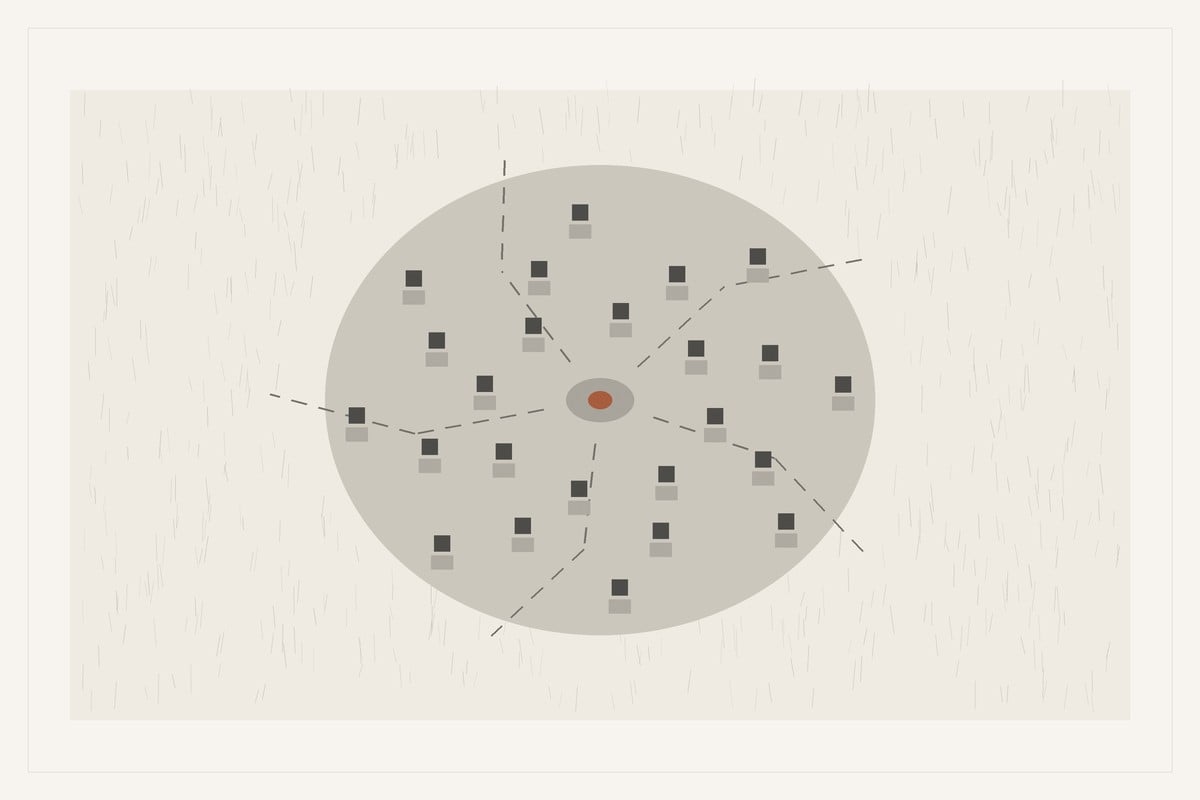
Three people started it in 1997 on 280 acres of cheap prairie in northeast Missouri. About seventy people live there now.
Moving in means agreeing to six ecological covenants.
No personal motorised vehicles used or stored on the land; no fossil fuels for vehicles, space heating and cooling, refrigeration or hot water; organic standards for everything grown; electricity from sustainable sources; timber reused, regionally harvested or certified; and organics and recyclables reclaimed from the waste stream.
The land belongs to a non-profit land trust and residents lease from it. A residential leasehold is small — about 2,500 square feet per person — and costs around $25 a month.
There is no buy-in, so people without much money can come; and since the land cannot be resold, its price never climbs.
What Kairos takes from it
The shorter the rules, the longer they last. Six lines can be learned on the first day, and those six lines are what keeps the village itself.
Video
Read more
- Official sitedancingrabbit.org
- From the villagedancingrabbit.org
- From the villagedancingrabbit.org
Tipperary, Ireland · Founded 2005
Cloughjordan Ecovillage
Instead of founding a new village in an empty field, they built onto one that was already there.
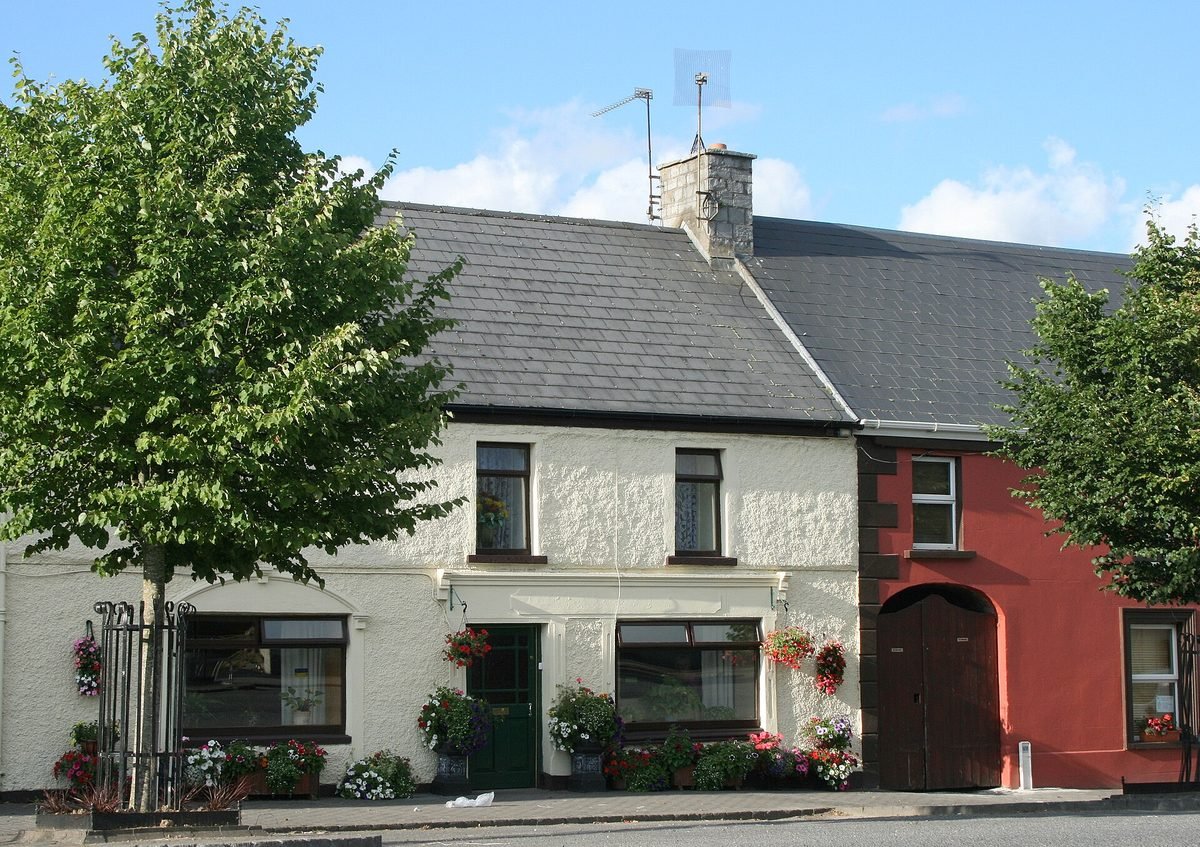
The project bought 67 acres of farmland beside the existing village of Cloughjordan in 2005, and the first residents moved in during December 2009. Because the new part joins the old, the shops, the school and the railway station are shared rather than rebuilt.
It has recorded the lowest ecological footprint ever measured in Ireland. Food is grown organically on the land, and the place is run democratically.
The village describes itself as a site of place-based education. Guided tours run on the first Sunday of every month at three o'clock, and schools and organisations stay to learn. Room for another 75 households is planned.
What Kairos takes from it
Found a village somewhere remote and you must build the school, the shop and the transport as well. Attaching it to an existing village removes that cost entirely.
Video
Read more
- Official sitethevillage.ie
- Wikipediaen.wikipedia.org
Alentejo, Portugal · Founded 1995
Tamera
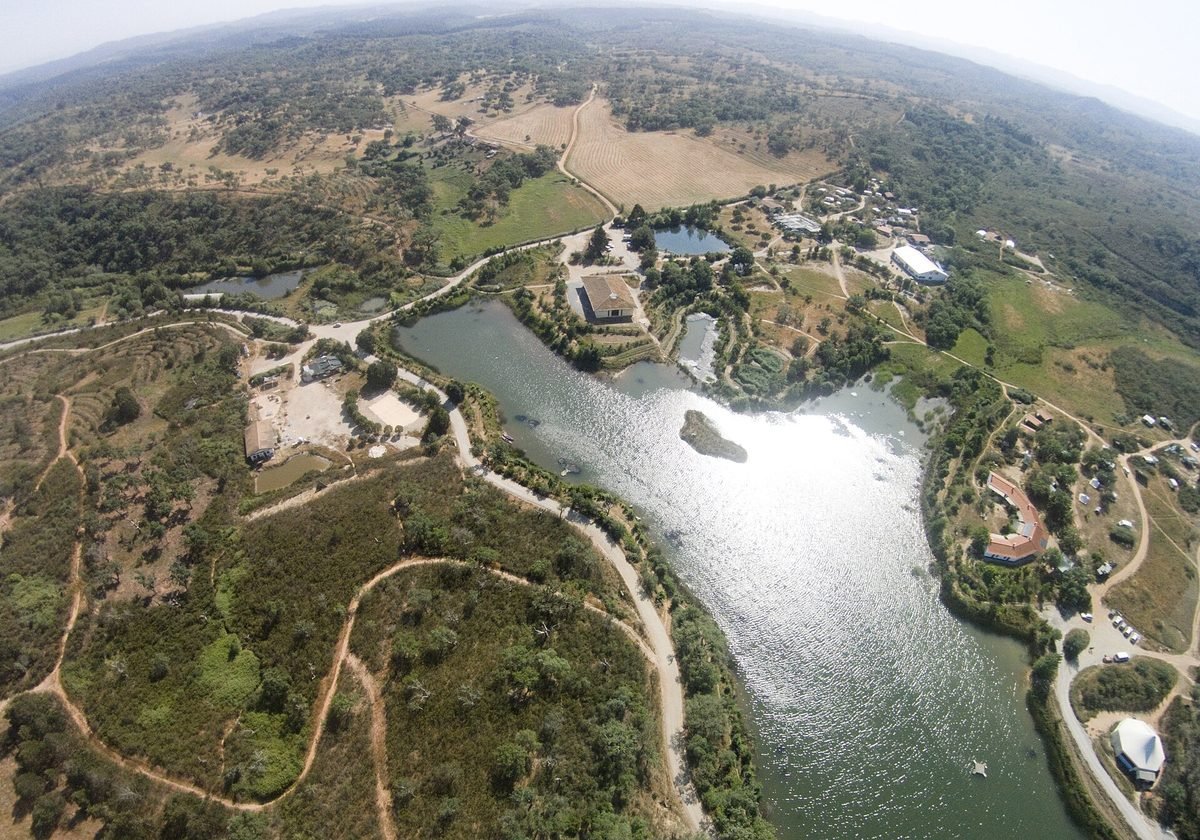
The first construction here was not a building but the land itself — they dug lakes to hold the rain.
It began in 1978, when three people left their professions. In 1983 fifty of them ran a three-year social experiment in the Black Forest, and in 1995 they took the results to 335 acres in the Alentejo in south-west Portugal.
About 160 people live there today, calling the place a peace research village.
Its best-known work is the Water Retention Landscape: a decentralised way of holding rainwater in the shape of the land itself, rather than letting it run off, in country that is turning to desert. Reforestation and farming are built on top of it.
Tamera follows its own distinct ideas and communal norms, so it is not a model to copy wholesale. On the order in which land is brought back to life, though, there is plainly something to learn.
What Kairos takes from it
On dry ground, water comes before housing. A house built before the water courses are settled cannot be moved later.
Video
Read more
- Official sitetamera.org
- From the villagetamera.org
Tennessee, USA · Founded 1971
The Farm
Once the largest hippie commune in the world; it shrank itself sharply, and has lasted another fifty years.
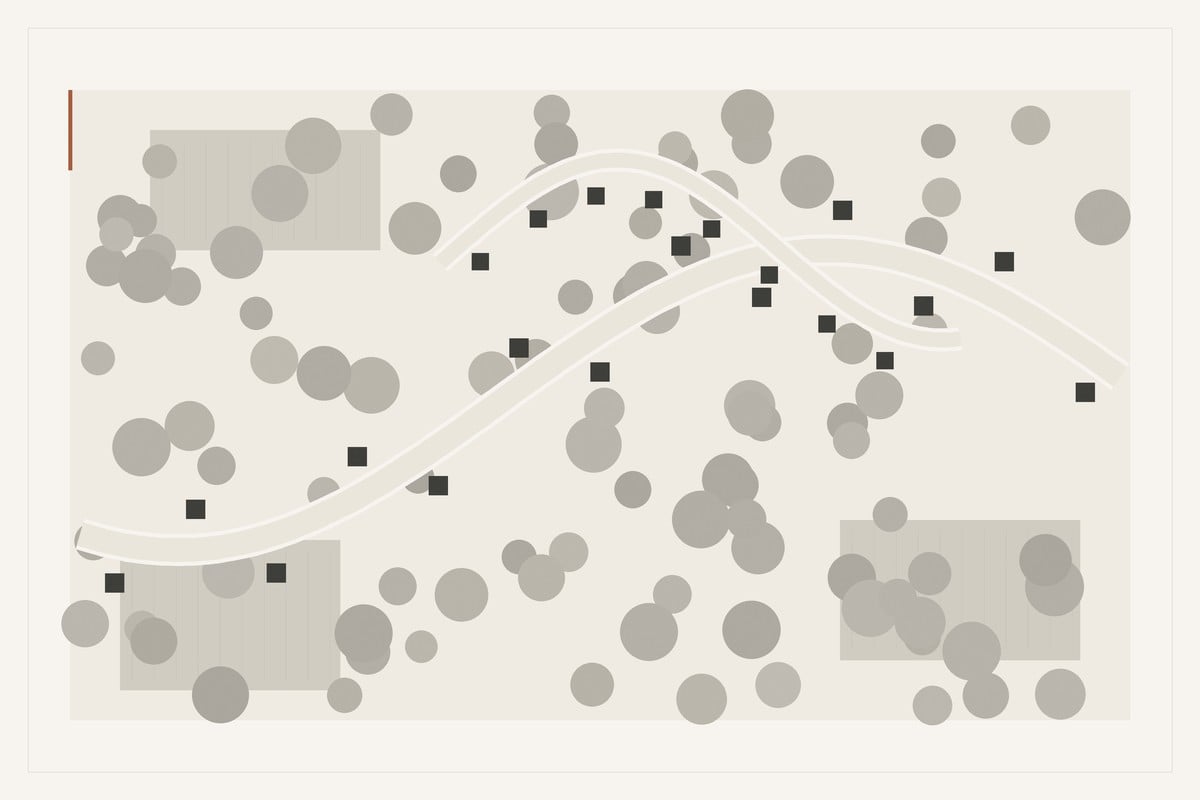
In 1971 Stephen Gaskin and 300 people from Haight-Ashbury in San Francisco settled in southern Tennessee. Nonviolence, respect for the earth and a vegan diet were the starting point.
American midwifery was revived here, and the modern home birth movement began from it.
Residents founded the relief and development organisation Plenty International, and the Swan Conservation Trust, which set aside a 1,358-acre preserve. Putting tofu, tempeh and soy milk on American tables was this village's work too.
Rapid growth broke both the infrastructure and the finances. A major restructuring in 1983, known as the Changeover, left a smaller, self-sustaining community; about 200 people now live on 1,750 acres held in trust.
What Kairos takes from it
When the ideals grow faster than the housekeeping, the village fails first. Only the places that decide to shrink in time get to meet a second generation.
Video
Read more
- Official sitethefarmcommunity.com
- Wikipediaen.wikipedia.org
New York, USA · Founded 1991
EcoVillage at Ithaca
They did not build it all at once: three neighbourhoods, one at a time, across twenty years.
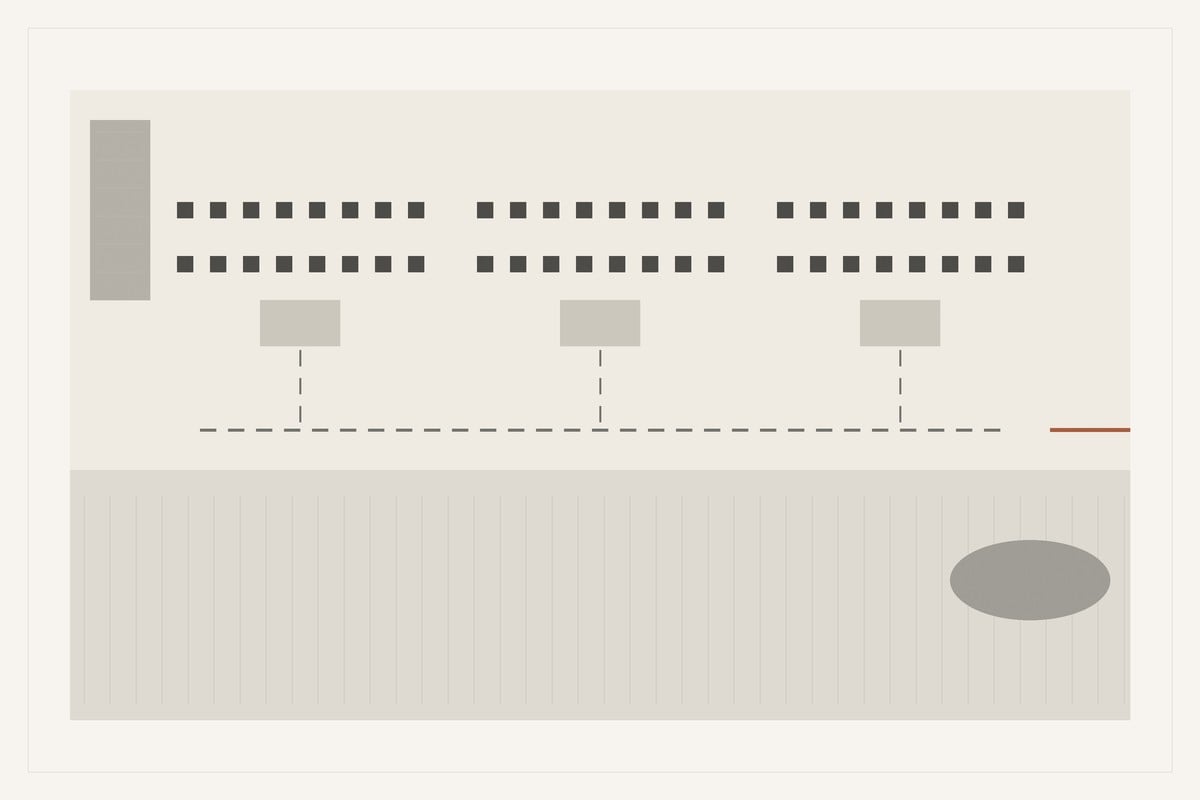
Begun in 1991, it is now 100 homes and 210 residents — 170 adults and 40 children — on 170 acres. More than 80 per cent of the land stays green, 50 acres of it under a conservation easement.
The village is made of three cohousing neighbourhoods. FROG, the first cohousing project in New York State, was finished in 1997; SONG followed in 2006 and TREE in 2015.
Each was built differently, so what one neighbourhood learned shaped the next.
Cars are parked outside the neighbourhoods and the houses are joined by footpaths through the gardens.
Each neighbourhood's common house hosts shared meals two or three times a week, and residents put in two to four hours of community work a week. Decisions are made by consensus or dynamic governance.
What Kairos takes from it
You do not have to finish it in one go. Complete one small neighbourhood, build the next with what you learned, and a mistake never spreads across the whole village.
Video
Read more
- Official siteecovillageithaca.org
- From the villageecovillageithaca.org
North Carolina, USA · Founded 1994
Earthaven
Everyone earns their own living — but the village is trying to make those livings inside itself.
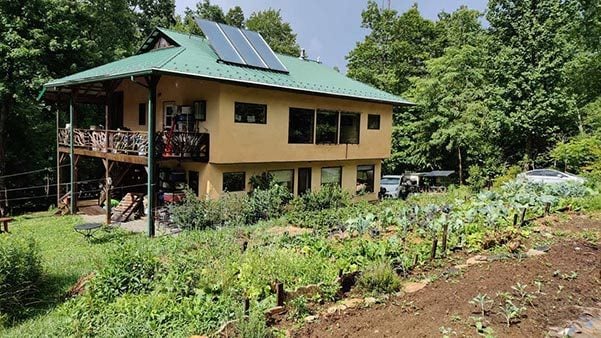
Founded in 1994 on 329 forested acres southeast of Asheville, Earthaven is home to about 75 adults and 25 children spread across fourteen small neighbourhoods.
Earthaven does not share income. Each member is responsible for their own living, but the village is building an economy at its own scale: small ecological businesses on site, members hiring one another where they can, members investing in each other's homes and businesses.
The common land is owned by the homeowners' association and was financed by private loans from members.
Houses are built with earthen plaster and wood harvested on the land, designed for passive solar and powered by photovoltaics and a micro-hydro installation. Decisions are made by a modified consensus process.
What Kairos takes from it
With no way to earn a living inside the village, people commute out and the village becomes a place people only sleep. Work belongs in the plan from the start.
Video
Read more
- Official siteearthaven.org
- From the villageearthaven.org
California, USA · Founded 1993
Los Angeles Eco-Village
They bought no land. They took the two city blocks they already lived on and changed those.
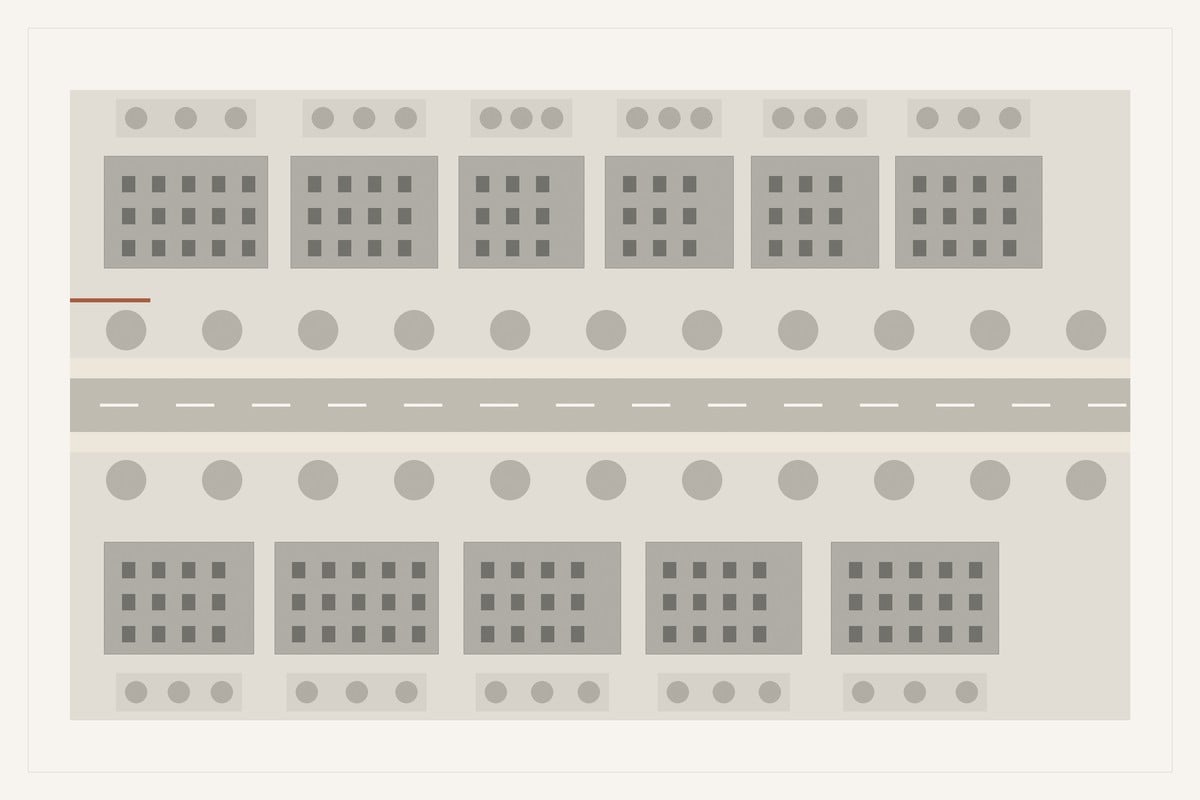
It began in 1993 across two blocks at the north end of Wilshire Center/Koreatown and into East Hollywood in Los Angeles. Thirty to forty people use the streets and buildings that were already there while changing how they live in the city.
Residents run several organisations together: the Beverly-Vermont Community Land Trust, which takes housing out of the speculative market; the housing co-operative Urban Soil/Tierra Urbana; a revolving loan fund for ecological projects; and a time bank.
It is the exact opposite of buying rural land and starting from nothing. Here a village is not founded somewhere else — it starts where people already live.
What Kairos takes from it
Starting a village does not necessarily require land. A few neighbours and a single block are enough to begin.
Video
Read more
- Official sitelaecovillage.org
- Community directoryic.org